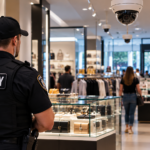
Every retail business in the United States is losing money right now. Not because of bad management or poor customer service, but because of a silent and consistent threat called retail shrinkage. Products vanish from shelves. Cash disappears from registers. Inventory records never quite match what is physically in the store. And the financial damage compounds every single day without a proper system in place to stop it.
The National Retail Federation reports that retail shrinkage costs the American retail industry over 100 billion dollars annually. That number represents real losses absorbed by real businesses, from independent boutiques operating on tight margins to national chain retailers with hundreds of locations. No retail business is immune, and no retail business can afford to ignore it.
Loss prevention in retail is the structured, professional response to this problem. It is not simply about catching shoplifters at the door. It is a complete operational framework that combines trained security personnel, smart technology, sound internal policies, and ongoing staff education to protect inventory, revenue, employees, and the long-term health of a retail business.
Reliance Security USA has provided professional loss prevention services to retail businesses across Maryland, Indiana, Florida, Colorado, California, and Illinois for years. Our Loss Prevention Division has seen firsthand how quickly shrinkage can damage a business and how effectively a well-executed loss prevention strategy can reverse that damage. This guide covers everything retail business owners need to understand about loss prevention, what it is, why it matters, and how it works in practice.
What Does Loss Prevention Mean in Retail?
Loss prevention in retail is the organized effort to identify, reduce, and eliminate all sources of financial loss within a retail operation. The centerpiece of this effort is controlling shrinkage, which is the gap between the inventory a retailer expects to have based on purchasing and sales records and the inventory that is actually present in the store.
When a product leaves the store without being paid for, that is shrinkage. When an employee manipulates a transaction to steal cash, that is shrinkage. When a supplier delivers fewer units than were invoiced, and the discrepancy goes unnoticed, that is shrinkage too. Loss prevention addresses every one of these scenarios through a combination of people, processes, and technology working together.
A professionally managed loss prevention program does not just reduce theft. It creates an environment where theft is significantly harder to commit, easier to detect when it occurs, and faster to investigate and resolve. For retail businesses operating in competitive markets where margins are already under pressure, that protection translates directly into stronger profitability and a safer working environment for every employee on the floor.
What Are the Main Causes of Retail Loss?

Retail shrinkage does not come from a single source. Understanding where losses originate is essential to building a loss prevention strategy that actually works.
External Theft and Shoplifting
Shoplifting by customers is one of the most visible and widespread sources of retail loss across the United States. It ranges from opportunistic individuals who take advantage of a momentary lapse in store monitoring to highly coordinated organized retail crime groups that systematically target multiple retail locations and resell stolen merchandise through secondary markets. The Federal Bureau of Investigation recognizes organized retail crime as a significant and growing threat to the American retail sector, with losses from these criminal networks reaching billions of dollars each year.
Internal Theft by Employees
Internal theft is consistently one of the most damaging sources of retail shrinkage because it is carried out by individuals who have direct access to merchandise, cash handling systems, inventory records, and back-of-house operations. Employees may steal merchandise directly, manipulate point-of-sale transactions, issue unauthorized refunds, provide friends and family with unpaid merchandise, or falsify inventory documentation. Research from the Association of Certified Fraud Examiners confirms that internal theft often goes undetected for extended periods precisely because the individuals responsible understand how store systems work and where the gaps in oversight exist.
Administrative Errors and Process Failures
Not every inventory discrepancy is the result of deliberate theft. Pricing errors, receiving miscounts, mislabeled products, data entry mistakes, and poorly managed markdown processes all contribute to shrinkage without any criminal intent involved. These errors accumulate across hundreds and thousands of transactions and create meaningful financial losses that a strong loss prevention and auditing program can significantly reduce.
Vendor and Supplier Fraud
Vendor fraud occurs when suppliers short-ship orders, charge for merchandise that was never delivered, or manipulate invoicing in ways that favor the vendor at the retailer’s expense. Without a rigorous receiving process and accountability measures built into the supply chain, retailers regularly absorb these losses without ever identifying their source.
How Does Retail Loss Prevention Work?

Retail loss prevention works through multiple overlapping layers of protection. Each layer on its own provides some deterrence and detection capability. Together, they create a retail environment where theft is far less likely to succeed and far more likely to be caught quickly when it is attempted.
Professional Loss Prevention Officers
Trained loss prevention officers are the foundation of any serious retail security program. These are not general-purpose security guards assigned to stand near an entrance. Loss prevention officers are specifically trained in retail theft behavior, surveillance techniques, lawful detention procedures, incident documentation, and coordination with local law enforcement agencies. They understand how to maintain a presence that deters criminal activity without disrupting the shopping experience for the vast majority of customers who are in the store for entirely legitimate purposes.
Reliance Security USA deploys loss prevention officers who are fully vetted, appropriately licensed under the laws of each state they operate in, and trained to handle the specific demands of retail environments. Our officers work in both uniformed and plainclothes capacities, depending on the needs and preferences of each retail client. They operate with a clear understanding of their legal authority and the proper procedures for documenting and reporting incidents in a way that supports prosecution when appropriate.
Video Surveillance and Monitoring
A professionally designed video surveillance system is one of the most powerful tools in retail loss prevention. Cameras positioned at entry and exit points, above cash registers, throughout the sales floor, in receiving areas, and in stockrooms create comprehensive visual coverage of the entire retail environment. This coverage serves three distinct purposes simultaneously. It deters individuals who know they are being recorded. It provides real-time monitoring capability for loss prevention officers reviewing live footage. And it generates documentary evidence that supports incident investigations and, where necessary, criminal prosecution.
Reliance Security USA also offers remote video security camera monitoring services for retail clients who want professional surveillance oversight without requiring a full-time on-site officer presence at every location.
Electronic Article Surveillance Systems
Electronic article surveillance, widely known in the retail industry as EAS, involves attaching hard tags or adhesive labels containing radio frequency technology to merchandise. When a tagged item passes through sensors at store exits without having the tag properly deactivated at the point of sale, an audible alarm is triggered. EAS systems have been used effectively in retail environments for decades and remain one of the most reliable and cost-effective deterrents against opportunistic shoplifting across all retail categories.
Store Layout and Environmental Design
The physical design of a retail store has a direct and measurable impact on loss prevention outcomes. Stores with clear sightlines from staffed positions, well-placed convex mirrors in blind spots, adequate lighting throughout the sales floor, and strategically positioned point-of-sale stations create an environment where suspicious behavior is harder to conceal. High-value merchandise secured in locked cases or positioned in high-visibility areas further reduces theft opportunity. Loss prevention professionals assess store layout as a core component of any comprehensive shrinkage reduction strategy.
Employee Training and Internal Accountability
Employees who understand what to look for, how to respond appropriately, and why loss prevention matters to the business they work for become one of the most effective deterrents against both external and internal theft. Training staff to greet every customer who enters the store, to monitor fitting rooms correctly, to follow proper cash handling procedures, and to report suspicious activity through the appropriate channels creates a culture of awareness and accountability that makes a measurable difference in shrinkage outcomes. Research consistently shows that a simple, consistent customer greeting is one of the most effective shoplifting deterrents available to any retailer.
Inventory Auditing and Cycle Counting
Regular and systematic inventory auditing creates the data foundation that loss prevention programs depend on. When inventory counts are conducted frequently and compared against purchasing and sales records, discrepancies surface quickly and their source can be investigated before losses compound. Cycle counting, which involves auditing specific sections of inventory on a rotating schedule rather than counting everything at once, allows retailers to maintain accurate inventory visibility without the operational disruption of full store counts. A strong auditing program makes internal theft significantly harder to sustain over time because unexplained losses appear in the data and trigger an investigation.
Why Is Loss Prevention Critical for Retail Businesses?

The financial case for investing in professional loss prevention is straightforward. Every dollar lost to shrinkage is a dollar that never reaches the bottom line. For retail businesses operating on margins of two to five percent, which is common across many retail categories, consistent shrinkage losses can eliminate profitability. A business losing three percent of revenue to shrinkage in an industry where net margins average four percent is barely breaking even, and one bad quarter can push it into loss territory.
Beyond the financial impact, retail theft creates genuine safety risks for employees. Shoplifting confrontations can escalate quickly, particularly when organized retail crime groups are involved. These groups sometimes use distraction, intimidation, and even violence as tools to facilitate theft. Having trained loss prevention officers on site provides a professional buffer that protects employees from situations they are not equipped or authorized to handle on their own.
There is also the deterrent value that a visible, professional loss-prevention presence provides. A retail environment that is closely monitored by trained professionals, equipped with visible surveillance technology, and staffed by attentive employees signals to anyone considering theft that the risk of being caught is high. That perception alone prevents a significant portion of opportunistic theft before it ever occurs.
Loss Prevention for Different Types of Retail Environments
Loss prevention strategies are not one-size-fits-all. The specific risks, vulnerabilities, and operational dynamics of a luxury jewelry retailer are entirely different from those of a pharmacy, a grocery store, or a cannabis dispensary. Effective loss prevention programs are built around the specific characteristics of each retail environment.
In high-value retail environments such as jewelry stores and luxury goods retailers, the focus is on protecting low-volume but extremely high-value items. Loss prevention approaches in these settings tend to be more discreet, with plainclothes officers, sophisticated surveillance systems, and strict access controls for high-value display cases.
In large format retail environments such as department stores and big box retailers, the sheer volume of daily foot traffic and the physical size of the sales floor create oversight challenges that require multiple loss prevention officers working coordinated coverage across different zones simultaneously.
In pharmacy and health and beauty retail, certain product categories, including razor blades, cosmetics, infant formula, and over-the-counter medications, are consistently among the most stolen items in American retail. Targeted strategies, including locked display cases, strategic shelf placement, and active floor monitoring, address these specific vulnerabilities.
Reliance Security USA has direct experience providing customized loss prevention services across all of these retail environments and adapts its strategy to match the real operational conditions of each client location.
Loss Prevention Services From Reliance Security USA
Reliance Security USA operates a dedicated Loss Prevention Division serving retail businesses across Maryland, Indiana, Florida, Colorado, California, and Illinois. Our approach is built on trained personnel, proven operational procedures, and a genuine understanding of what retail businesses face in today’s environment.
Every loss prevention officer we deploy has passed a thorough background screening process, holds the appropriate state licensing where required, and has received specialized training in retail theft detection, lawful intervention procedures, incident documentation, and law enforcement coordination. Our officers are professionals who represent your business appropriately while protecting it effectively.
We begin every client engagement with a comprehensive assessment of the retail location, reviewing current shrinkage data where available, evaluating physical layout and surveillance infrastructure, identifying internal process vulnerabilities, and developing a customized loss prevention plan tailored to the specific needs of that business. Whether a client operates a single retail location or manages a network of stores across multiple states, Reliance Security USA has the personnel and operational capacity to deliver consistent, professional loss prevention coverage.
Conclusion
Retail loss is not a problem that resolves itself. Without a deliberate and professionally managed loss prevention strategy, shrinkage continues to grow, profitability continues to decline, and the safety risks for employees increase. The businesses that address this problem proactively with trained personnel, smart technology, strong internal processes, and a culture of accountability are the ones that protect their margins, their people, and their long-term viability in a competitive retail market.
Reliance Security USA brings the experience, the licensed personnel, and the operational expertise to implement loss prevention solutions that produce real and measurable results. Retail businesses across six states trust our Loss Prevention Division to protect what they have built. We are ready to do the same for you.
Contact Us
Your retail business deserves protection that actually works. Reliance Security USA serves retail businesses across Maryland, Indiana, Florida, Colorado, California, and Illinois with professional loss prevention services that reduce shrinkage, protect employees, and strengthen your bottom line.
Contact Reliance Security USA today to schedule your free consultation. Our Loss Prevention Division is ready to assess your retail environment and build a customized security strategy that starts delivering results from day one.