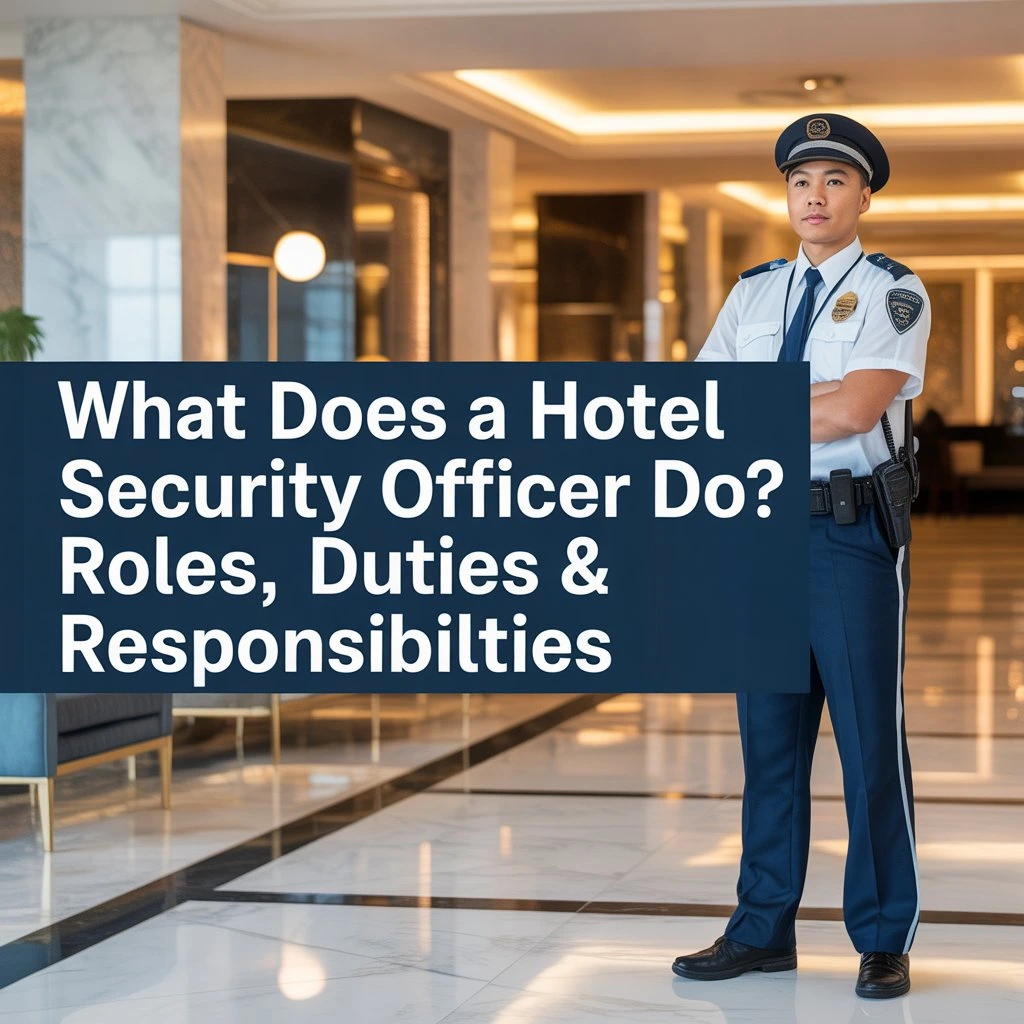
Hotel security is not something guests think about when their stay is going well. It is something they notice the moment it falls short. Every hotel that takes its guests seriously invests in trained security professionals who know exactly what their job demands and why it matters.
This guide covers the complete role of a hotel security officer. If you are a hotel owner, a manager evaluating your team, or someone exploring this as a career, you will find practical and honest answers here.
What Is a Hotel Security Officer?

A hotel security officer is a trained professional responsible for protecting guests, staff, and hotel property at all times. Their work covers every part of the property, every hour of the day, across every shift without exception.
Most people picture a security officer standing near a door checking IDs. The actual job is far more demanding. Hotel security officers patrol guest corridors, monitor surveillance systems, manage access control points, respond to emergencies, handle conflicts, assist guests with safety concerns, and keep detailed records of every incident that occurs during their shift.
Hotels are among the most active environments in any city. Hundreds of guests check in and out each day. Events fill banquet halls. Visitors move through lobbies at all hours. Staff work overnight in spaces that can become unpredictable. Managing security in this environment requires professionals who are alert, well trained, and ready to handle anything from a noise complaint to a full medical emergency.
Core Duties and Responsibilities of a Hotel Security Officer
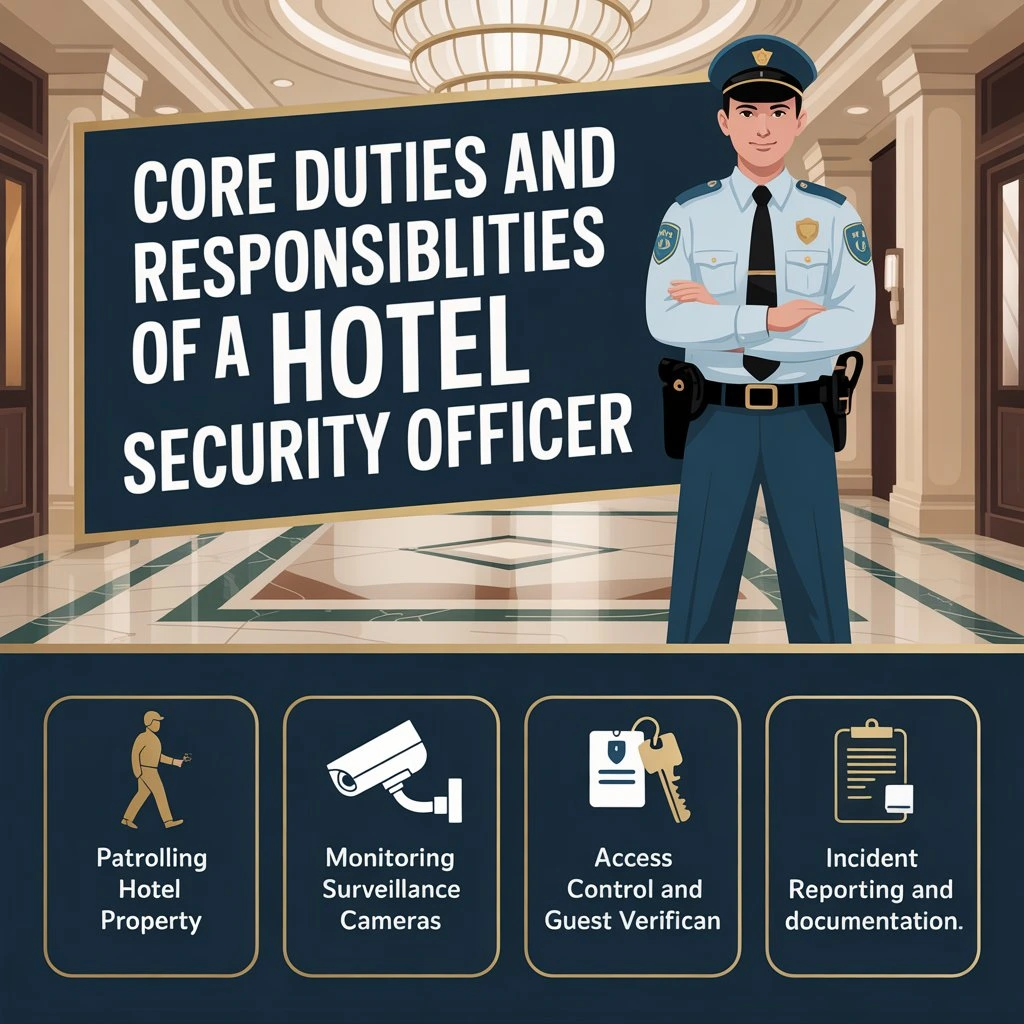
Hotel security officer duties are designed around prevention first and response second. The primary goal is not to react after something goes wrong. The primary goal is to create conditions where problems are far less likely to happen in the first place.
Patrolling Hotel Property
Regular patrols are the most visible part of hotel security work. Officers walk through lobbies, hallways, guest room corridors, parking areas, stairwells, and restricted zones on a consistent and deliberate schedule. This physical presence alone reduces risk because potential threats know the property is being actively monitored by someone who is trained to notice them.
A patrol is not a casual walk. Officers are trained to check that doors are properly secured, identify individuals who appear in areas without reason, spot safety hazards before they affect guests, and note anything on the property that looks out of place.
Monitoring Surveillance Cameras
Physical patrols cover ground, but surveillance monitoring covers everything else. Hotel security officers watch CCTV systems across the property to detect suspicious behavior, unauthorized access attempts, and developing situations before they escalate into something serious.
Early detection through surveillance is one of the most powerful tools available in hotel security. An officer who identifies a problem on camera can respond immediately or alert a colleague before the situation grows into a genuine threat.
Access Control and Guest Verification
Controlling who enters and exits the hotel is one of the most direct ways to protect every person inside. Hotel security officers monitor entry and exit points, verify the identity of guests and visitors where required, and prevent unauthorized individuals from reaching guest floors, back of house areas, or any restricted zone on the property.
Access control becomes especially important during events, peak check-in periods, and in areas of the hotel where guest privacy must be carefully protected at all times.
Incident Reporting and Documentation
When anything security-related happens on the property, it must be documented with accuracy and detail. Hotel security officers record disturbances, theft, injuries, suspicious activity, and guest complaints that involve a safety element.
Thorough incident reports protect the hotel legally, give management the information they need to make good decisions, and build a reference record for the future. Over time, these records reveal patterns that allow security teams to improve their procedures and address vulnerabilities before they are exploited.
What Does a Hotel Security Officer Do on a Daily Basis?
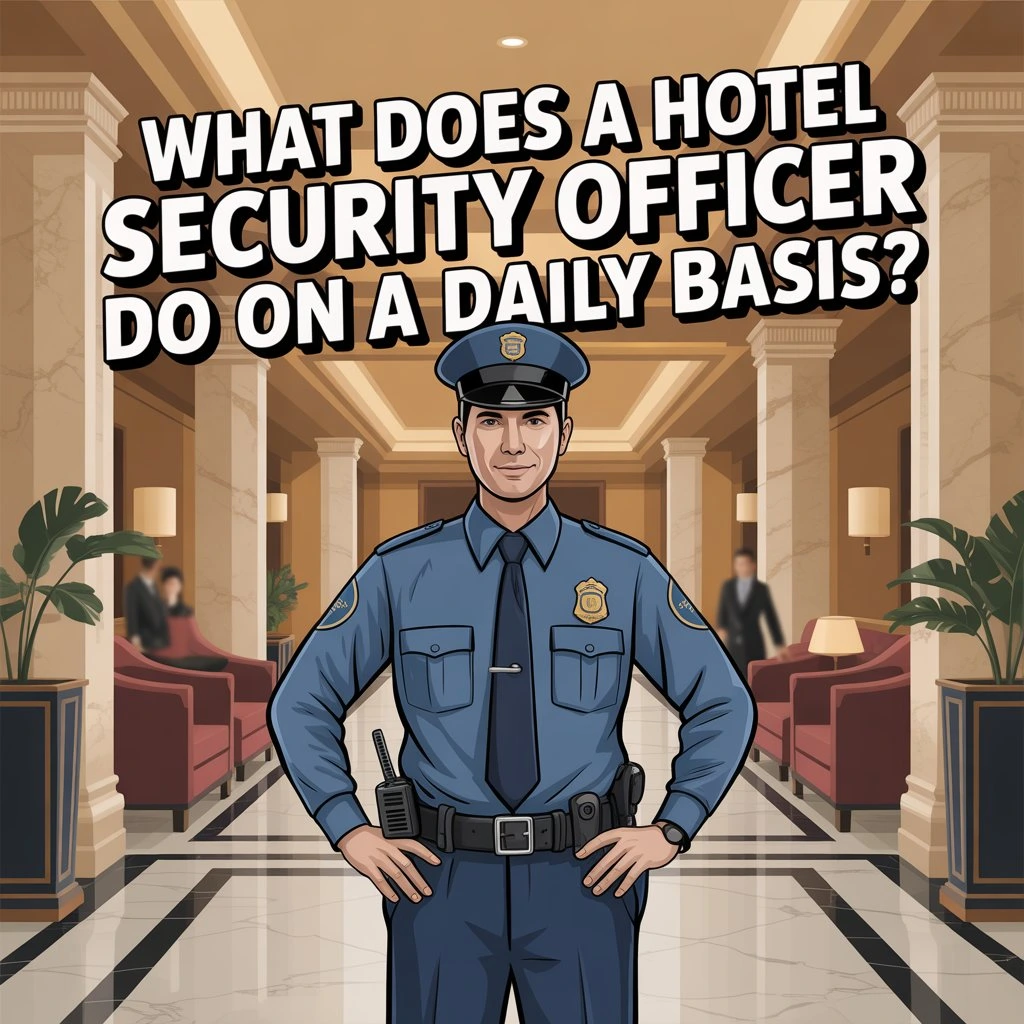
Every shift follows a structured and disciplined routine. A hotel security officer’s day is built around prevention, active presence, and consistent coordination with the rest of the hotel team.
A typical shift includes a briefing where the incoming officer reviews any incidents or concerns from the previous team. From there the officer begins the first property walkthrough, covering lobbies, corridors, parking areas, and restricted zones to assess the current state of the hotel.
Throughout the shift the officer monitors surveillance cameras, checks access points, and remains available to respond to any guest complaint or safety concern. If a guest reports a noise disturbance, a suspicious person, or a hazard anywhere on the property, the security officer responds immediately and handles the situation professionally.
Coordination with hotel staff runs continuously. Security officers communicate with front desk teams, housekeeping, and management to stay updated on guest activity, scheduled events, and any developing concerns.
Before the shift ends, the officer compiles a detailed report documenting all incidents, rounds completed, and anything that needs to be passed on to the next team. This handover process is what keeps coverage consistent and ensures nothing falls through the gap between shifts.
Essential Skills Every Hotel Security Officer Must Have
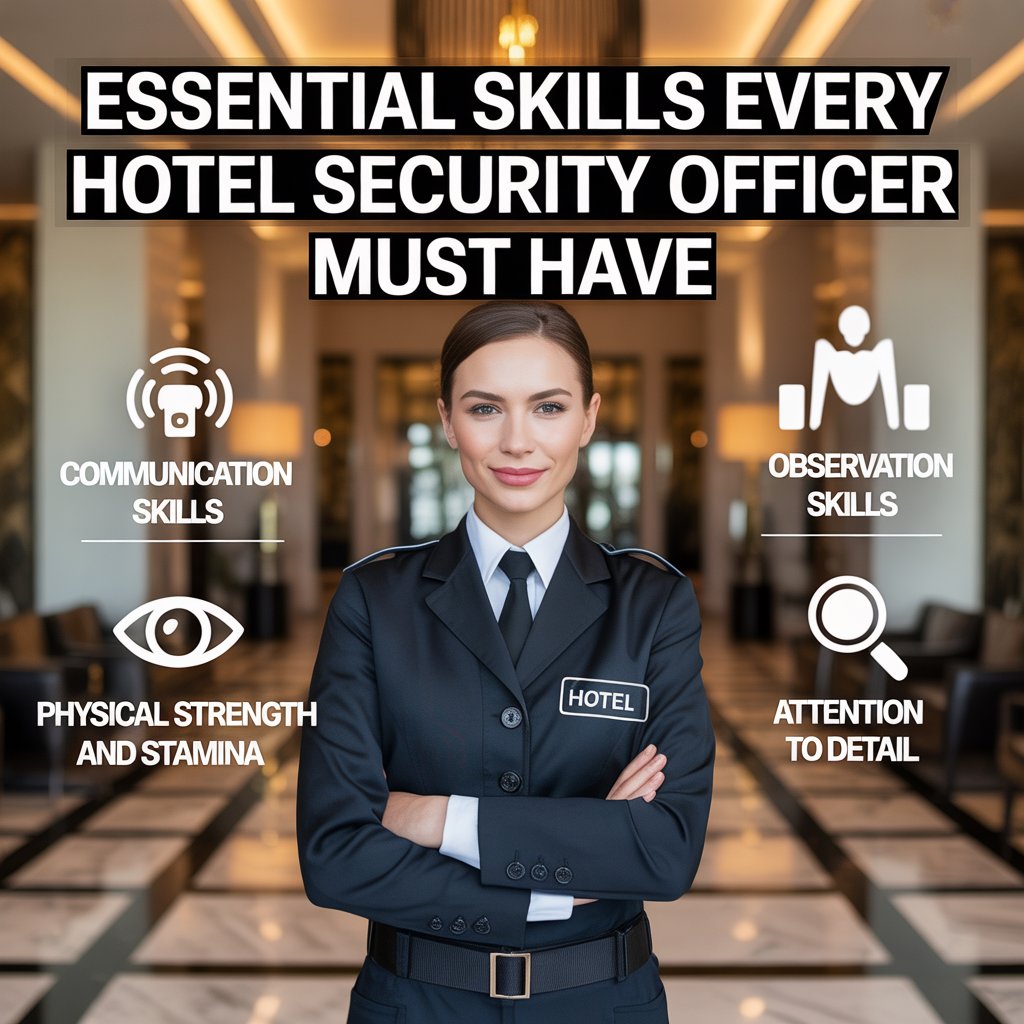
Performing this role well requires far more than showing up in uniform. Hotel security officers need a specific combination of professional skills to handle the variety of situations this job presents every single day.
Clear Communication
Hotel security officers speak with guests, staff, law enforcement, and hotel management constantly. In routine situations, strong communication builds trust and reassures guests that the property is being managed with care. In tense situations, calm and clear words can prevent a minor disagreement from becoming a serious incident. Officers who communicate well are consistently more effective at resolving conflicts than those who rely on authority and presence alone.
Sharp Observation
Security officers who catch problems early prevent them from growing. Sharp observation skills allow officers to spot suspicious behavior, identify individuals who appear out of place, and watch surveillance footage with real focus rather than passive attention. The sooner a threat is identified, the sooner it can be neutralized before it reaches anyone on the property.
Physical Fitness and Stamina
Hotel security shifts are long. Officers spend hours walking, standing, patrolling, and remaining fully alert. When an emergency demands rapid movement or physical intervention, physical fitness becomes critical. An officer who fatigues midway through a shift becomes less effective as the hours pass, and that creates real gaps in the protection the hotel is paying for.
Attention to Detail
Small things matter in hotel security. An unlocked door in a restricted area. A familiar face appearing in an unfamiliar place. A discrepancy in a guest log or incident report. Officers who notice these signals catch potential threats before they become incidents. In hotel loss prevention especially, overlooking a small irregularity can eventually result in significant financial damage to the property.
How Does a Hotel Security Officer Handle Emergencies?
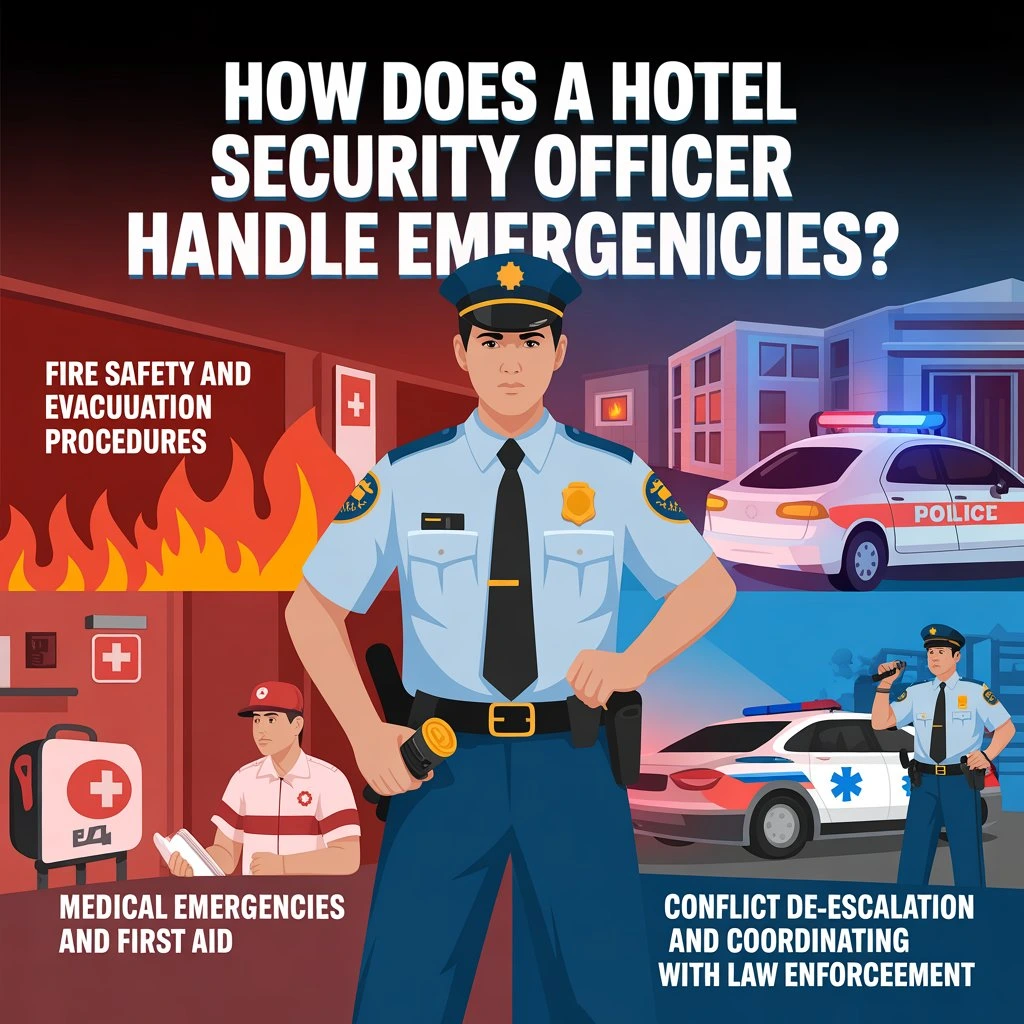
Emergency response is where training, composure, and preparation are genuinely tested. Hotel security officers are equipped to handle a range of serious situations, and their ability to respond quickly and professionally directly affects outcomes for guests and staff.
Fire Safety and Evacuation
When a fire alarm sounds, guests and staff look to the security officer for direction. Hotel security officers are trained in fire safety protocols and evacuation procedures. They guide everyone to safety in an orderly and efficient manner, coordinate with hotel management and local fire departments, clear all areas of the property, and confirm that no guest or staff member has been left behind.
Medical Emergencies and First Aid
Medical emergencies can happen anywhere on a hotel property and often do so without any warning. Hotel security officers are frequently certified in CPR and first aid, which makes them the first responders on scene before professional medical services arrive. An officer who can administer first aid or perform CPR in the first critical minutes of a medical emergency can genuinely save a life. Their calm and trained response reduces harm and provides immediate support to guests and staff when they need it most.
Conflict De-escalation and Law Enforcement Coordination
Conflicts between guests or between guests and staff are among the most common situations hotel security officers face. Trained de-escalation techniques allow officers to calm tense situations professionally and without resorting to excessive force. When a situation goes beyond what the security team can lawfully manage, they coordinate directly with local law enforcement to ensure the matter is resolved safely and properly.
Hotel Security Officer and Guest Relations

The most effective hotel security officers understand that their role extends well beyond enforcement and emergency response. They are also active representatives of the hotel’s hospitality standard. Every interaction a security officer has with a guest contributes to the experience that guest carries home with them.
Maintaining a Welcoming Atmosphere
A security officer’s presence on the property should make guests feel safe, not watched or uncomfortable. Officers are trained to carry themselves in a way that is approachable, professional, and reassuring at all times. When a guest encounters a security officer in a lobby or hallway, the natural reaction should be comfort and confidence. Hotels that build this balance between visible security and genuine hospitality develop stronger guest loyalty than properties that treat security as a purely authoritative function.
Assisting VIP and High-Profile Guests
When high-profile or VIP guests are staying at the property, hotel security officers take on additional responsibilities. This includes personally escorting guests to their rooms or vehicles, managing crowd control during public appearances, and ensuring that privacy is protected throughout every moment of the stay. Handling these situations with discretion and professionalism reflects directly on the hotel’s reputation and standing.
How Does a Hotel Security Officer Protect Hotel Assets?
Asset protection is one of the most financially significant and frequently underestimated parts of hotel security work. A hotel’s assets include physical items such as furniture, electronics, linens, and equipment, alongside the financial integrity of daily operations.
Preventing Internal Theft and Shrinkage
Not all theft originates from outside the property. Internal theft by staff members causes serious financial damage to hotels over time. Hotel security officers work closely with management to monitor high-risk areas, review surveillance footage regularly, and maintain a visible presence that discourages theft from both inside and outside the building. This is a core part of the hotel loss prevention function and directly protects the financial health of the property.
Safeguarding Guest Property and Vehicles
Guests trust the hotel to protect their belongings from the moment they arrive. Hotel security officers fulfill that trust through regular patrols of parking facilities, close monitoring of luggage storage areas, and careful attention to all spaces where guest property is kept. Vehicles that are not broken into, luggage that arrives intact, and personal belongings that are where guests left them all build the kind of positive experience that earns repeat business and strong reviews.
Education and Certification Requirements for a Hotel Security Officer
The qualifications required to work as a hotel security officer vary by state and by employer, but certain standards apply across most positions in the United States.
Basic Educational Requirements
Most hotel security positions require a high school diploma or GED as the minimum educational qualification. Candidates must pass a thorough background check confirming no disqualifying criminal history, provide a valid government-issued ID, and meet the minimum age requirement set by their state, which is typically 18 or 21 depending on the responsibilities the role involves.
Security Guard Training and Licensing
All states require security officers to complete state-approved training and obtain the appropriate security license before working legally in the field. Each state sets its own licensing standards, so candidates must verify the specific requirements for the state where they intend to work. CPR and first aid certification is increasingly required by hotels as a standard condition of employment because security officers are frequently the first on scene when a medical emergency occurs on the property.
Career Growth Opportunities for a Hotel Security Officer
Hotel security is a real career path with genuine advancement opportunities for those who are committed to developing their skills and expertise over time. Starting as a security officer provides hands-on experience across every area of hotel operations, which becomes the foundation for moving into leadership roles.
Career Path from Security Officer to Director of Security
The progression in hotel security is structured and achievable. A security officer who performs consistently and builds their professional credentials can advance to security supervisor, then to security manager, and eventually to director of security. Each step brings greater responsibility, broader influence over hotel operations, and stronger earning potential.
Hotels prefer to promote from within because internal candidates already know the property, the team, and the security systems in place. Officers who pursue additional training and certifications position themselves for faster and more sustainable advancement within the hospitality industry.
Why Is Security Important in a Hotel?
A hotel is a temporary home. Guests trust the property to keep them safe in a place they do not know, surrounded by people they have never met. That trust has to be earned and protected through consistent and professional security work every single day.
Hotels without adequate security become vulnerable to theft, violence, vandalism, and legal liability. A single serious incident can damage a reputation that took years to build. Negative experiences shared publicly online reach thousands of potential future guests within hours and have lasting consequences for bookings and revenue.
Hotel security also protects staff who work long overnight shifts in environments that can become unpredictable. It safeguards physical and financial assets from both internal and external threats. Hotels that invest in professional security communicate clearly to every guest and every employee that their safety is a genuine priority, and that message builds the kind of trust that keeps a hotel profitable for years.
Why Reliance Security USA Is the Right Choice for Hotel Security
Hotel owners and managers looking for reliable hotel security services need a company that understands how the hospitality industry operates and can deliver trained officers who meet those demands every day without exception.
Reliance Security USA specializes in hotel security services across the United States. Their officers are trained in standard security protocols and in the specific professional standards that hospitality environments require. Unlike general security providers, Reliance Security USA prepares its teams to balance firm security enforcement with the approachable and guest-focused conduct every hotel needs.
For hotel owners and managers searching for professional hotel security officers, Reliance Security USA offers a proven and dependable solution backed by real industry experience. Contact Reliance Security USA today to build a security plan designed specifically for your property.
Conclusion
A hotel security officer does far more than stand at an entrance. This guide has covered the full scope of the role, from daily duties and professional skills to emergency response, guest relations, asset protection, and career advancement.
Trained hotel security officers are not optional. They are essential to the safe and successful operation of any hotel property. If you are ready to protect your guests, your staff, and your investment with a security team you can trust, contact Reliance Security USA today.
Frequently Asked Questions
What does a hotel security officer do on a daily basis?
On a daily basis, a hotel security officer conducts property patrols, monitors surveillance cameras, manages access control points, responds to guest complaints and security incidents, coordinates with hotel staff across all departments, and completes a detailed end-of-shift report before handing over to the incoming team.
What are the duties of a hotel security guard?
The core duties of a hotel security guard include patrolling hotel premises, monitoring CCTV systems, controlling access to restricted areas, verifying guest and visitor identities, responding to emergencies, preventing theft, and maintaining accurate incident documentation for every security-related event that occurs on the property.
What skills does a hotel security officer need?
A hotel security officer needs strong communication skills, sharp observation, physical stamina, keen attention to detail, and the ability to de-escalate conflicts calmly and professionally. These skills work together to protect guests, staff, and hotel property across every type of situation this role presents.
Why is security important in a hotel?
Security is important in a hotel because it protects guests, staff, and property from theft, violence, and liability risks. It also preserves the hotel’s reputation and ensures that every guest enjoys a safe, comfortable, and welcoming experience from check-in to checkout.
How does a hotel security officer protect guests?
A hotel security officer protects guests by conducting regular patrols, monitoring surveillance systems, controlling access to restricted areas, responding quickly to emergencies, and maintaining a visible and professional presence that deters threats before they reach anyone on the property.
Can a hotel security officer detain someone?
A hotel security officer has limited detainment authority. In most US states, they can perform a citizen’s arrest only under specific legal circumstances and cannot detain individuals the way law enforcement officers can. When situations require full legal authority, hotel security officers coordinate immediately with local police.
How many security officers does a hotel need?
The number of security officers a hotel needs depends on the size of the property, daily guest volume, building layout, and the overall risk level of the location. Larger hotels with high guest traffic and multiple event spaces generally require a full security team operating across multiple shifts around the clock.
What qualifications do I need to become a hotel security officer?
To become a hotel security officer in the United States, you need a high school diploma or GED, a clean background check, state-approved security guard training, a valid security license, and CPR or first aid certification. Some hotels require additional qualifications based on the specific responsibilities involved in the role.