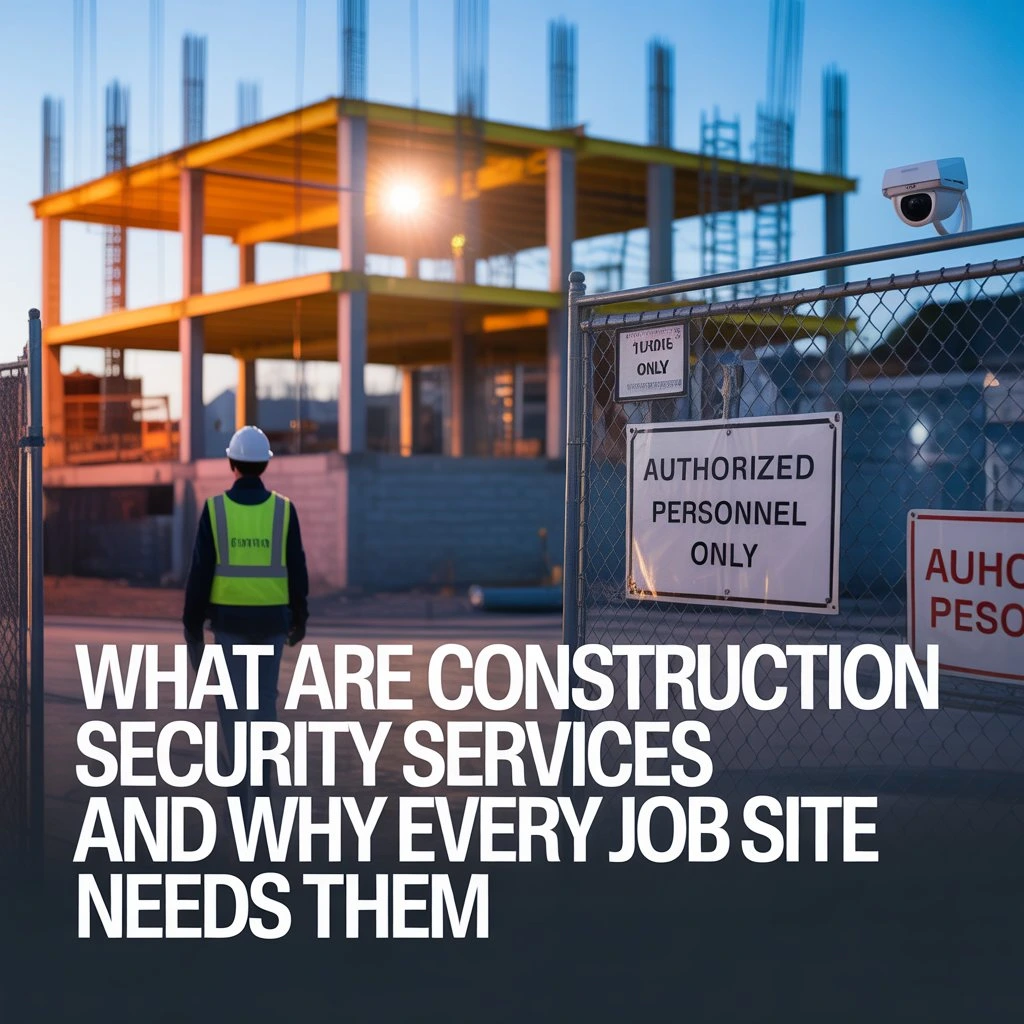
Construction security services are professional security solutions designed specifically to protect job sites from theft, vandalism, unauthorized access, and workplace accidents. These services include on-site security guards, surveillance camera systems, access control, remote monitoring, and perimeter fencing. According to the National Insurance Crime Bureau (NICB), over 11,000 construction equipment theft incidents occur in the United States every year, with annual industry losses ranging from $300 million to $1 billion. A professional construction security service is the most effective way to reduce that risk.
The Scale of the Problem: Why Construction Sites Are Targeted
Construction sites are among the most frequently targeted locations for theft and vandalism in the United States. The reasons are straightforward. A typical active job site contains hundreds of thousands of dollars worth of equipment, materials, and tools, much of it left in open-air environments with limited supervision overnight and on weekends. When the crew goes home, an unprotected site becomes an easy opportunity for thieves.
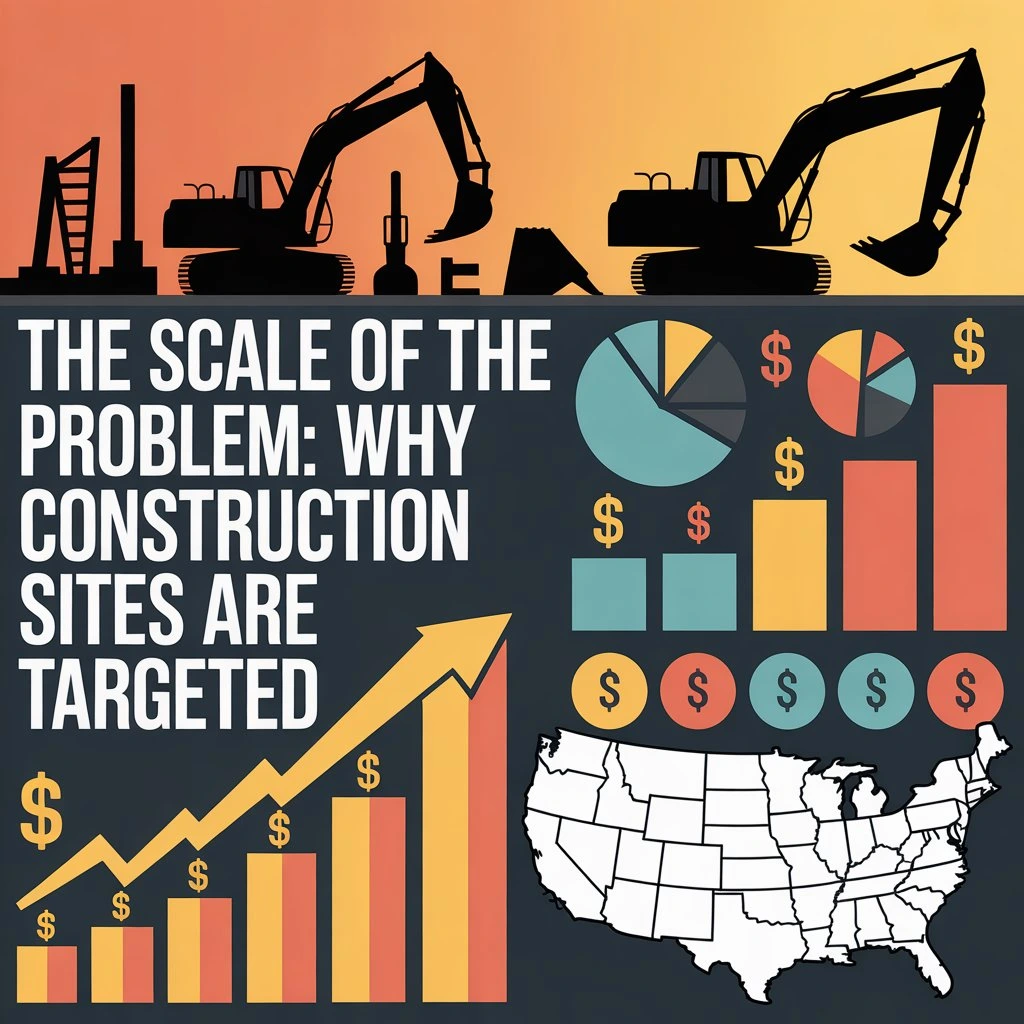
The numbers from law enforcement data are striking. According to the FBI’s National Incident-Based Reporting System (NIBRS), in 2021 alone more than 11,000 thefts were reported at construction sites across the country, a figure that actually exceeded the number of thefts recorded at convenience stores in the same period. According to Building Security Services and NICB data, the recovery rate for stolen construction equipment and materials is below 7 percent for individual items, and only about 1 in 5 stolen pieces of heavy equipment is ever recovered. For most construction companies, a theft is effectively a total loss.
The financial damage goes well beyond the replacement cost of stolen items. According to a 2024 report published in Construction Dive and cited by Sensera Systems, equipment and material theft adds an estimated 1 to 5 percent to overall project costs through delays, increased insurance premiums, replacement procurement time, and the disruption to project schedules that follows a major theft incident. On a $5 million project, that figure alone can represent $50,000 to $250,000 in additional costs.
Texas leads all states in construction equipment theft, accounting for 24 percent of all incidents nationally according to data compiled by RadiusVision. Georgia follows at 11 percent, then Louisiana at 9 percent, with North Carolina and Florida each at 6 percent. These regional patterns mean that contractors working in high-risk states face a significantly elevated threat level compared to the national average.
What Are Construction Security Services?
Construction security services is a broad term that covers a range of specialized security solutions designed for the unique challenges of active job sites, which differ significantly from standard commercial or residential security needs. A construction site is a dynamic environment. The layout changes week to week as the project progresses, access points shift, the value and type of assets on-site changes constantly, and the workforce itself is often large and varied, including employees from multiple subcontractors, delivery personnel, and site visitors.
Professional construction security companies understand these variables and build security programs around them. The core services offered by established providers typically fall into several overlapping categories, each addressing a different layer of site vulnerability.
Types of Construction Security Services
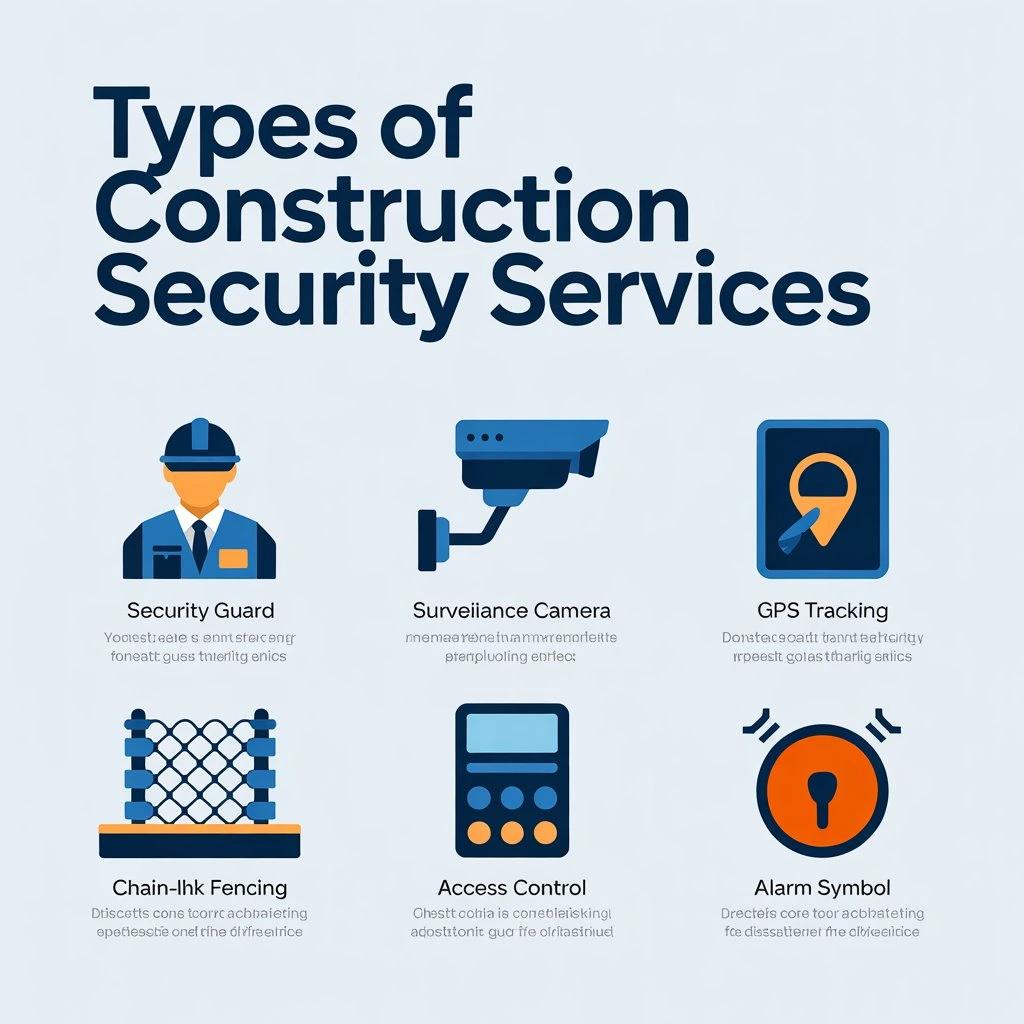
1. On-Site Security Guards
Uniformed security officers stationed at a construction site remain the most effective deterrent against theft, unauthorized access, and vandalism. According to Building Security Services, which provides security to construction sites across New York City and New Jersey, a visible human security presence during non-working hours is the single most effective deterrent available to construction companies. Guards perform regular perimeter walks, control access at entry points, check credentials for workers and visitors, monitor surveillance feeds, and respond immediately to incidents.
Security guard services for construction sites are typically structured around the highest-risk periods, which are nights, weekends, and holidays when the site is unattended by the construction crew. Many contracts cover overnight shifts from the end of the working day through the following morning, ensuring continuous protection during the hours when theft is most likely to occur.
2. Remote Video Surveillance and Monitoring
Camera-based surveillance systems have become a cornerstone of construction site security, particularly as the technology has advanced to offer real-time remote monitoring capabilities. Modern construction surveillance systems use mobile camera units equipped with 4G LTE transmission technology, which means they operate autonomously without needing a hardwired connection to the site infrastructure. This is critical on construction sites because the power and cabling situation changes constantly as the project develops.
WCCTV, one of the leading providers of mobile surveillance cameras for U.S. construction sites, describes its systems as multi-application units that deliver security coverage, time-lapse project documentation, and remote project management capability from a single installation. Pro-Vigil, another major provider in this space, offers real-time alerts that notify security teams and site managers the moment motion is detected in restricted areas, significantly reducing the response time to incidents.
According to a July 2024 theft investigation in Howard County, Maryland, authorities uncovered an organized theft operation involving over 15,000 stolen construction tools valued between $3 million and $5 million, linked to sites across Maryland, Virginia, and Pennsylvania. Cases like this underscore why passive surveillance that simply records footage is no longer sufficient. Active remote monitoring that triggers an immediate response is now considered the industry standard for serious construction security programs.
3. Access Control Systems
Access control on a construction site means managing who can enter the site, when they can enter, and which areas of the site they are authorized to access. On smaller sites this is often managed by a security guard at a single controlled entry point. On larger commercial or infrastructure projects, electronic access control systems are used, which may include key card readers, biometric scanners, or vehicle identification systems at site gates.
The Great American Insurance Group, one of the major insurers for construction projects in the United States, recommends limiting active job sites to a single controlled access point wherever physically possible. This concentrates all entry and exit through one location, which makes it far easier to monitor and control who is on-site at any given time. The National Equipment Register (NER) supports this approach and recommends combining controlled access with perimeter fencing, motion-sensor lighting, and alarm systems as a baseline security package for any serious construction project.
4. Perimeter Security and Fencing
Physical perimeter security is the first line of defense for any construction site. Properly installed security fencing prevents opportunist thieves from easily walking onto a site and removes direct line of sight to valuable materials and equipment, which reduces the likelihood of a site being targeted in the first place. Fence coverings that block visibility from the street are specifically recommended by WCCTV as a deterrent against opportunistic burglary.
Perimeter security also includes temporary lighting installations, which serve a dual purpose. Good lighting deters thieves who rely on darkness to operate undetected, and it ensures that any surveillance cameras installed on the site have clear, usable footage if an incident does occur. BOS Security, which provides construction site security across the southeastern United States, recommends positioning lighting so that it illuminates the entire perimeter without creating blind spots in camera coverage.
5. GPS Tracking and Equipment Monitoring
GPS tracking devices installed on heavy equipment and high-value assets allow construction companies to monitor the location of their machinery in real time and receive immediate alerts if a piece of equipment is moved outside of authorized hours or locations. The National Equipment Register specifically recommends GPS tracking as a core component of any construction site security plan for projects that involve heavy machinery.
The effectiveness of GPS tracking is reflected in recovery statistics. According to research published in the proceedings of the Associated Schools of Construction, heavy equipment that is equipped with tracking technology has a meaningfully higher recovery rate than untracked equipment when stolen. While the overall recovery rate for all stolen construction equipment sits below 21 percent, tracked equipment recoveries significantly exceed that figure. For large machines like excavators, cranes, and bulldozers, which can represent losses of $40,000 to several hundred thousand dollars per incident, GPS investment is clearly worthwhile.
6. Alarm Systems and Intrusion Detection
Construction site alarm systems have evolved considerably from simple motion-triggered sirens. Modern systems integrate with surveillance cameras and remote monitoring centers to provide a layered response to intrusion events. When a sensor is triggered, the monitoring center verifies the alert through live camera footage before dispatching a response, which dramatically reduces false alarm callouts while ensuring that genuine intrusions receive an immediate response.
According to Pro-Vigil, whose remote monitoring service covers construction sites across the United States, the combination of real-time camera verification and immediate audio warning to intruders has proven effective in deterring theft attempts at the point of entry rather than simply recording them for after-the-fact review.
What Construction Security Services Actually Protect
Understanding what assets are most commonly targeted on construction sites helps explain why professional security services are designed the way they are. Different assets require different protective approaches, and a well-designed security program addresses each of the primary risk categories.
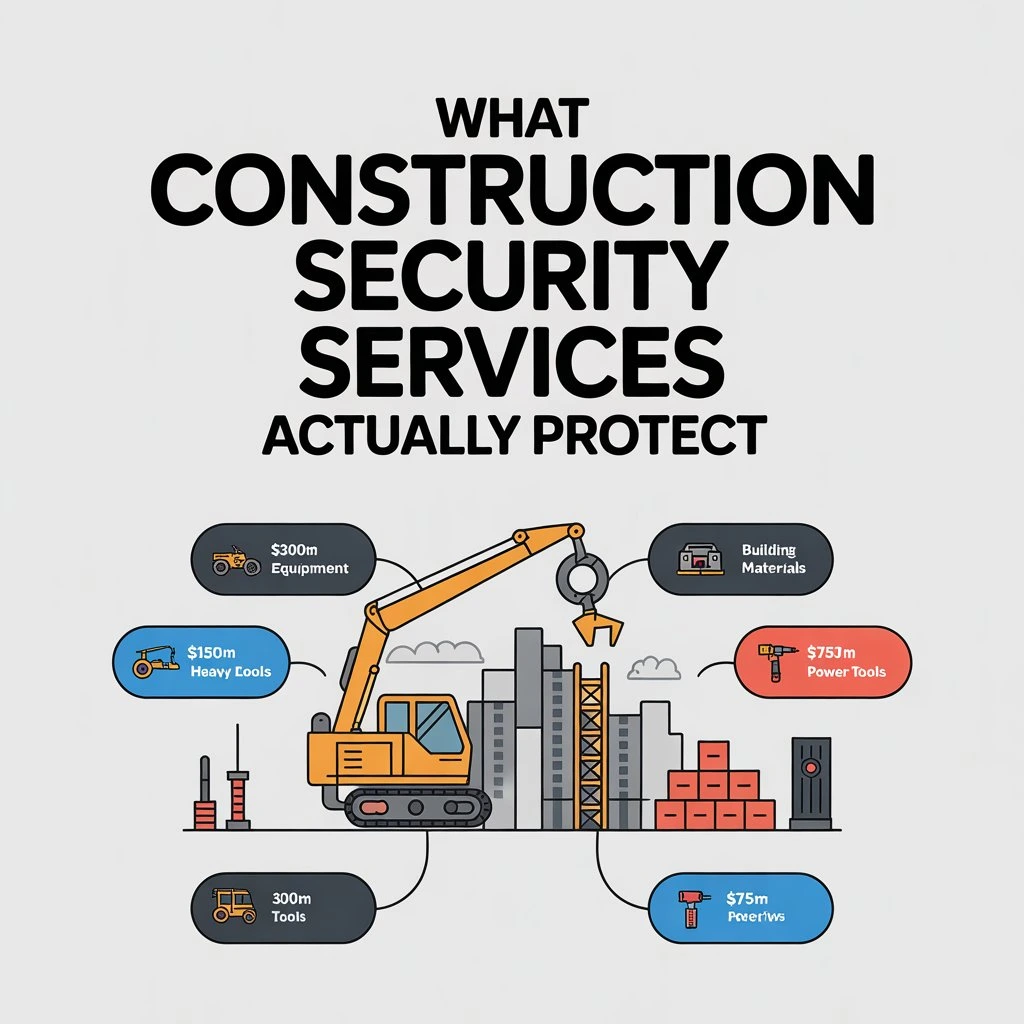
Heavy equipment and machinery:
Excavators, bulldozers, cranes, and similar equipment represent the highest-value theft targets on any construction site. According to NIBRS research, stolen trucks average a loss of more than $42,000 per incident, and they are the most frequently stolen item by dollar value. Equipment is typically stolen during overnight or weekend periods when sites are unattended.
Copper and electrical materials:
Copper theft is one of the most costly problems in the construction industry. According to the U.S. Department of Energy via data cited by Building Security Services, $1 billion worth of copper alone is stolen from construction sites annually in the United States. Copper wiring, plumbing components, and electrical panels are consistently targeted because copper carries high resale value through scrap metal dealers.
Lumber and structural materials:
Lumber prices increased by more than 300 percent between 2020 and recent years according to Neuroject’s 2024 construction theft analysis, making timber and wood framing materials increasingly attractive theft targets. Entire pallets of lumber can be removed from an unguarded site overnight using trailers and trucks.
Power tools and hand tools:
Small tool theft is the most frequently occurring category of construction site theft, even though individual incident values are lower than equipment theft. According to LVT’s construction theft analysis, in some cases losses from a single night’s tool theft have reached up to $100,000. Small tools are particularly difficult to recover because they are easily transported and sold through informal channels.
Fuel and vehicle components:
Fuel theft from construction vehicles and equipment is a widespread problem, as is the theft of tires, batteries, and other vehicle components. Fuel caps can be locked to deter vandalism and siphoning, and Great American Insurance Group recommends removing batteries or steering wheels from heavy equipment parked overnight as a basic immobilization measure.
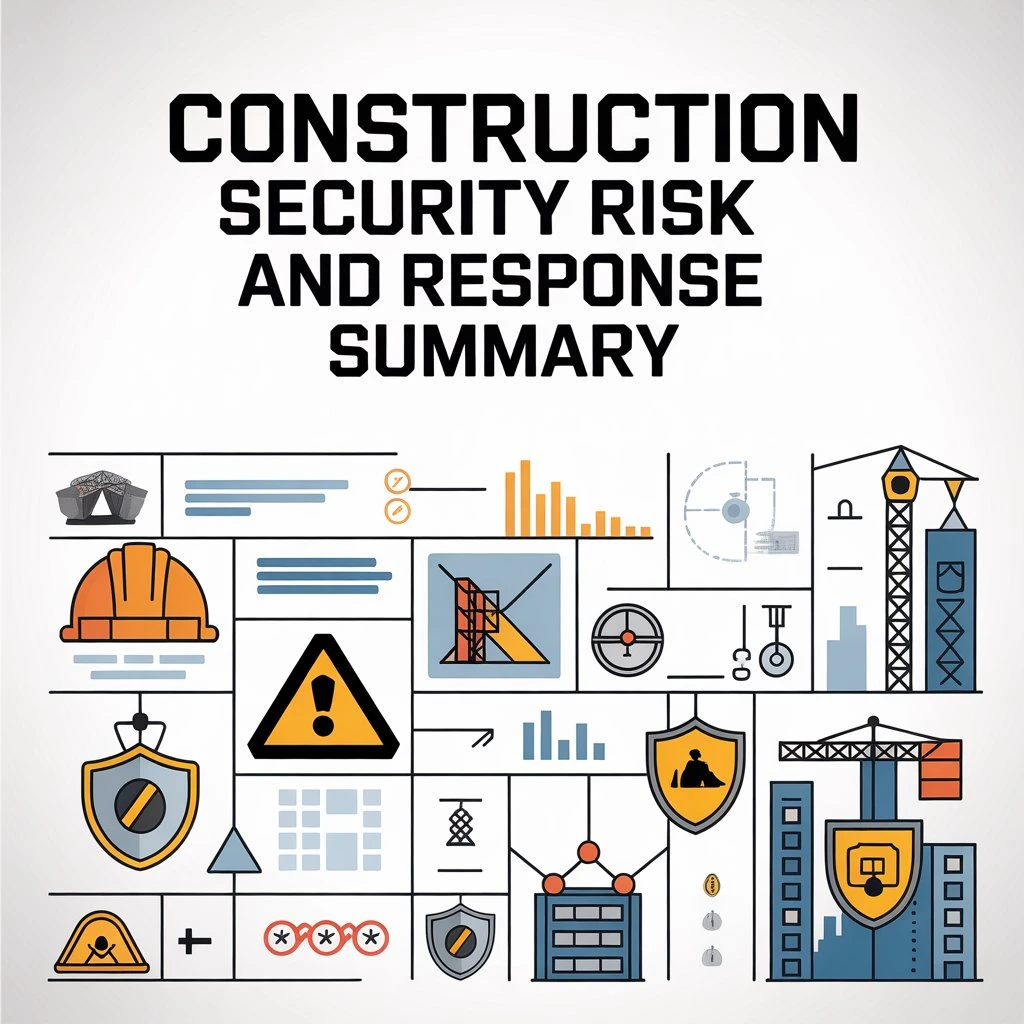
Construction Security Risk and Response Summary
Threat Type | Annual US Loss | Recommended Security Response |
Equipment theft | $300M to $1B | GPS tracking, overnight security guards, immobilization |
Copper theft | $1B (copper alone) | Surveillance cameras, perimeter fencing, alarm systems |
Tool theft | Up to $100K per incident | Locked storage, access control, inventory systems |
Vandalism | $18K+ per incident (2025 data) | Lighting, perimeter fencing, remote monitoring |
Unauthorized access | Liability and injury exposure | Single controlled entry point, credentialing, guards |
How to Build a Construction Site Security Plan
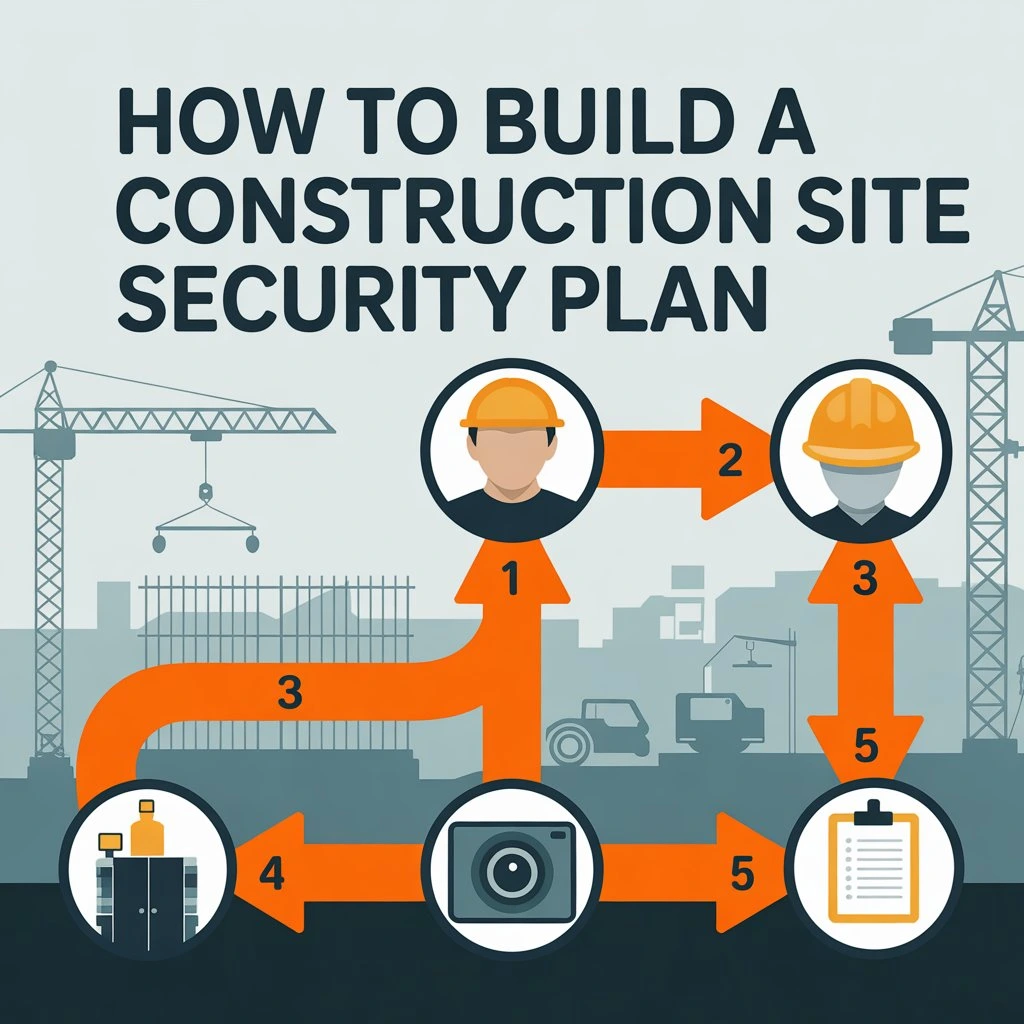
A construction site security plan is not a one-size-fits-all document. The right approach for a 10,000 square foot residential build in a suburban area looks very different from what a $200 million commercial tower in a high-crime urban center requires. The starting point for any effective security plan is a thorough site risk assessment.
- Conduct a site risk assessment. Evaluate the site’s location, neighborhood crime rates, the total value of equipment and materials on-site, the number of access points, the lighting situation, and the project timeline. This assessment forms the foundation of every security decision that follows.
- Identify your highest-value assets. Not everything on a construction site carries equal risk. Heavy equipment, copper materials, and fuel storage require more intensive protection than standard building materials. Prioritize your security resources around the assets that represent the greatest potential loss.
- Secure the perimeter first. Install site fencing with limited, controlled access points before any significant equipment or materials arrive on-site. Add perimeter lighting and consider fence coverings to block visibility into the site from public streets.
- Install surveillance systems early. Mobile camera units should be positioned before the project ramps up, not after the first theft incident. Work with your security provider to map camera positions against the site layout and adjust placements as the project progresses.
- Establish access control protocols. Define who is authorized to be on-site, what credentials they need to enter, and how deliveries and visitor access will be managed. Document these protocols and communicate them to all subcontractors and site supervisors.
- Implement an inventory management system. Track all equipment and materials from point of delivery through installation. Keep records of serial numbers, take photographs of high-value items, and maintain a daily log of assets on-site. Great American Insurance Group specifically recommends photographing all large-ticket items and recording identifying numbers in two locations on each machine.
- Build a reporting and response protocol.
- Every worker on-site should know how to report suspicious activity and who to contact. Pro-Vigil recommends treating security awareness as a shared responsibility across the entire workforce, not just the security team.
The Cost of Construction Security Services
One of the most common reasons construction companies delay investing in professional security is concern about cost. This calculation almost always works against the contractor when viewed through the lens of actual theft and loss data.
According to SentryPods data cited by Building Security Services, the average loss per construction theft incident ranges from $6,000 to $30,000 depending on the type of equipment involved. Truck theft averages over $42,000 per incident. For projects where multiple incidents occur, or where organized theft rings target the site systematically, total losses can reach several hundred thousand dollars.
By contrast, the cost of professional construction security services varies considerably based on site size, location, risk level, and the specific services required. Guard-based security for overnight and weekend coverage, combined with a mobile surveillance system and perimeter fencing, typically represents a fraction of the potential loss exposure on any medium to large construction project. When factoring in the reduction in insurance premiums that often follows the implementation of documented security measures, the cost-benefit case for professional construction security services is straightforward.
Theft also adds indirect costs that are harder to quantify but equally real. Missing equipment halts work, pushing back project timelines and triggering contractual penalties. Replacing stolen materials takes time, especially in a supply chain environment where lead times on certain materials can stretch for weeks. The reputational damage of repeated theft incidents on a project site can also affect a firm’s relationships with subcontractors and insurers over the long term.
Worker Safety: The Other Role of Construction Security
Construction site security is often discussed primarily in the context of theft prevention, but worker safety is an equally important function of a well-managed security program. According to the Occupational Safety and Health Administration (OSHA), the construction industry consistently records more worker fatalities than any other sector of the U.S. economy. In 2022, construction accounted for nearly 20 percent of all worker fatalities nationally despite representing a far smaller share of the total workforce.
Unauthorized access to active construction sites is a serious safety risk. Members of the public, trespassers, and unauthorized individuals who enter an active job site without proper safety training and personal protective equipment are exposed to hazards that trained construction workers manage with caution. A slip, fall, or contact with active machinery by an unauthorized visitor can result in severe injury and significant liability for the contractor.
Security personnel who manage access control and patrol site perimeters serve a dual function in this regard. They protect the physical assets on-site, and they also protect against the liability and human cost of unauthorized access incidents. This dual function makes the value proposition for construction security even stronger when evaluated holistically across both the theft prevention and safety compliance dimensions.
Frequently Asked Questions
What are construction security services?
Construction security services are specialized security solutions designed to protect job sites from theft, vandalism, unauthorized access, and safety incidents. They include on-site security guards, mobile surveillance cameras, access control systems, perimeter fencing, GPS equipment tracking, and alarm systems. According to NICB data, over 11,000 construction theft incidents occur annually in the U.S., making professional security a critical investment for any serious construction project.
How much does construction site theft cost the industry?
According to the Insurance Journal and National Equipment Register, equipment and material theft costs the U.S. construction industry up to $1 billion annually. Copper theft alone accounts for an additional $1 billion in losses according to U.S. Department of Energy data. The average loss per individual theft incident ranges from $6,000 to $30,000 depending on the equipment type, and recovery rates are below 7 percent for most stolen items.
What is the most effective construction site security measure?
According to Building Security Services, the single most effective deterrent is a visible human security presence, particularly during non-working hours. However, the most comprehensive protection combines on-site guards with surveillance cameras, perimeter fencing, access control, and GPS tracking. No single measure is fully effective in isolation; a layered approach addresses different threat types simultaneously.
What states have the highest rates of construction site theft?
According to data compiled by RadiusVision, Texas leads all states with 24 percent of all construction equipment theft nationally. Georgia follows at 11 percent, Louisiana at 9 percent, and North Carolina and Florida each account for 6 percent. Contractors working in these states should treat security planning as a higher priority than the national average would suggest.
Do construction security services help with worker safety?
Yes. In addition to protecting physical assets, construction security services play an important role in preventing unauthorized access to active job sites, which is a major safety liability. OSHA data shows that construction accounts for nearly 20 percent of all U.S. worker fatalities annually. Security personnel who control site access help prevent untrained individuals from entering hazardous environments, reducing both injury risk and contractor liability.
What should a construction site security plan include?
A construction site security plan should include a site risk assessment, perimeter fencing and lighting, a surveillance camera system with real-time monitoring, a single controlled access point for all site entry, an inventory management system for equipment and materials, GPS tracking on heavy equipment, and a clear incident reporting and response protocol for all site workers.
How do surveillance cameras help with construction site security?
Modern construction surveillance cameras use 4G LTE technology to operate autonomously without hardwired power connections, making them ideal for active job sites where the infrastructure changes regularly. Real-time remote monitoring allows security teams to verify alerts and respond to intrusions as they happen rather than reviewing footage after a theft has already occurred. According to Pro-Vigil, audio warnings triggered when intruders are detected have proven effective in stopping theft attempts at the point of entry.
Is construction site security tax deductible?
In most cases yes. Security services contracted for a construction project are generally treated as a project expense and may be deductible as an ordinary business cost. The specific treatment depends on how the expense is classified in your accounting, whether as a project cost or an overhead expense, and your business structure. Consult a licensed accountant or tax advisor for guidance specific to your situation.