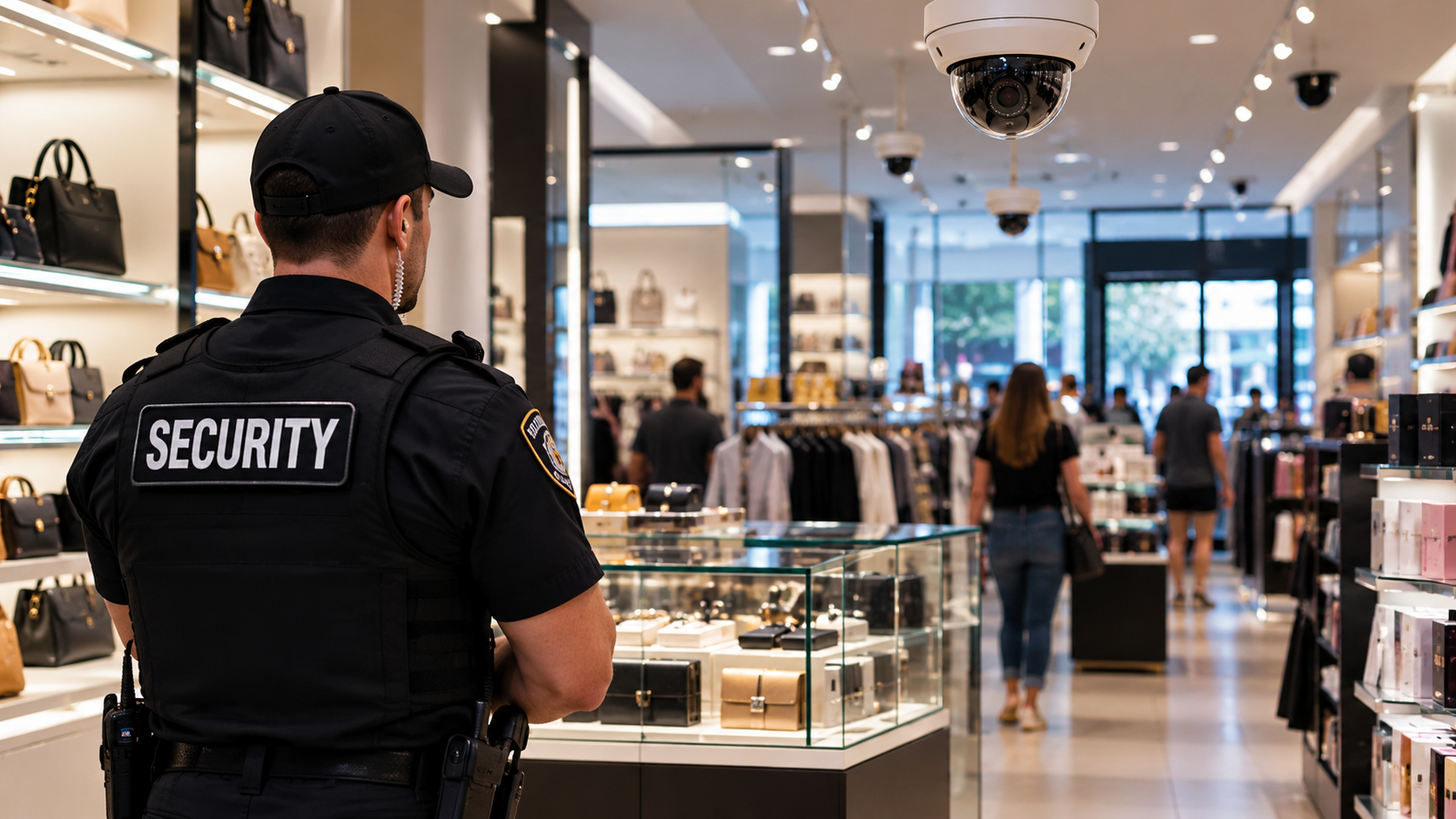
Retail Loss Prevention in Texas: Practical Ways to Reduce Shrink
Retail theft and inventory loss can affect margins, staff confidence and day-to-day operations. For Texas retailers, loss prevention works best as a coordinated programme that combines store procedures, staff awareness, inventory controls, incident documentation and security measures suited to the location.
No single tactic eliminates loss. The goal is to identify where losses occur, apply proportionate controls, treat customers and staff fairly, and review results over time.
What Loss Prevention Means for a Retail Business
Retail loss prevention covers more than responding to suspected shoplifting. It can include reducing inventory errors, deterring theft, improving receiving and returns procedures, controlling access to restricted areas and documenting incidents consistently.
Different stores face different risks. A small shop, grocery store, big-box retailer and multi-location chain will not necessarily need the same staffing, technology or procedures.
For businesses evaluating professional support, loss prevention services in Texas can be considered alongside internal policies and inventory controls.
1. Understand the Loss Patterns Before Choosing Controls
Review inventory discrepancies, shrink reports, returns, damaged goods, receiving records and incident logs. Look for recurring patterns by product category, department, shift, delivery window or location. Use reliable data and avoid making assumptions about individuals based on appearance or other protected characteristics.
Set a baseline before changing procedures. This helps management understand whether an intervention is useful and where further investigation is warranted.
2. Strengthen Receiving, Returns and Inventory Procedures
Many preventable losses are linked to process gaps. Match deliveries to purchase orders, document discrepancies promptly, restrict access to stockrooms and establish clear approval rules for refunds, exchanges, voids and price adjustments.
Use role-based access to inventory systems and review exceptions consistently. Good records help distinguish process errors from suspicious patterns and support fair, evidence-based decisions.
Warehouses and distribution areas also need clear procedures. Review warehouse security services in Texas where stock storage, receiving and dispatch security are relevant to your operation.
3. Improve Store Layout and Visibility
Keep high-value or frequently lost merchandise in areas where staff can monitor it appropriately. Maintain clear sightlines, good lighting and organised displays, and check that cameras or mirrors do not create blind spots. Store design should support customer service and accessibility, not make the shopping experience hostile.
Post clear policies where needed and train staff on how to report concerns. Employees should not be expected to confront suspected offenders unless that responsibility, training and procedure are explicitly appropriate.
4. Train Staff on Safe, Consistent Responses
Train team members to recognise and report concerning behaviour without profiling customers. Establish who should be contacted, what details should be recorded and when management or law enforcement should be involved.
Safety comes first. Staff should follow company policy and local law, avoid unnecessary physical confrontation and never put themselves or customers at risk to protect merchandise.
5. Decide Whether Dedicated Loss Prevention or Security Support Is Needed
Some businesses can improve results through process changes and staff training alone. Others may benefit from dedicated loss prevention personnel, uniformed security officers, mobile patrols or a combination, particularly across large premises, multiple entrances or several locations.
Choose coverage based on documented risks, opening hours, incident patterns and the layout of the premises. Clarify responsibilities, reporting, escalation and how performance will be reviewed.
Retailers can review retail security services in Texas when considering security arrangements for their premises.
For broader commercial coverage, see security guard services in Texas.
6. Use Technology Thoughtfully
Inventory analytics, access logs, alarms and video surveillance can support a loss prevention programme when deployed lawfully and with clear responsibilities. Technology should address a defined problem, and staff should understand how alerts are reviewed and who is authorised to access records.
Review camera placement, retention, access permissions and signage against applicable legal requirements and company policies. Do not collect or retain more information than necessary for the legitimate purpose.
7. Create a Consistent Incident Documentation Process
Record incidents promptly using a standard format: date and time, location, factual observations, action taken, relevant witnesses and any evidence preserved under policy. Separate direct observations from assumptions, and limit access to reports to authorised personnel.
Review incidents across locations to identify recurring operational gaps. A spike in losses may call for a process review, a staffing adjustment or a change in merchandise controls rather than a single universal solution.
8. Review Results and Adjust the Programme
Track measures that match the business, such as inventory variance, confirmed incidents, reporting quality, response time and completion of corrective actions. Compare periods consistently and consider changes in sales volume, stock mix and operating hours before drawing conclusions.
Hold periodic reviews with store management and relevant security partners. Update procedures when a new location opens, the layout changes or the data shows that existing controls are not addressing the problem.
Choosing Loss Prevention Support in Texas
When evaluating a provider, ask about experience with similar retail environments, supervision, officer training, incident reporting, escalation procedures and how coverage is tailored to each site. Confirm the services offered in the relevant Texas location and verify applicable credentials before signing an agreement.
Reliance Security USA offers security services for commercial settings. Retailers considering outside support should explain their locations, hours, loss patterns and operational concerns so that the appropriate service scope can be assessed.
Conclusion
An effective retail loss prevention programme combines reliable data, well-designed procedures, trained staff, suitable security measures and regular review. Start with the causes and patterns of loss, then select controls that are proportionate to the business and safe for staff and customers.
Retailers should treat loss prevention as an ongoing operational process, not a one-time installation or a single security tactic.
Frequently Asked Questions
What is retail loss prevention?
Retail loss prevention is the combination of procedures, staff practices, inventory controls and security measures used to reduce theft, inventory errors and other preventable losses.
Does every Texas retailer need a loss prevention officer?
No. The appropriate approach depends on the store’s size, risk profile, operating hours, incident history and available internal controls.
What is the difference between retail security and loss prevention?
Retail security often focuses on site safety, access, visibility and incident response. Loss prevention also includes inventory accuracy, receiving and returns controls, process review and shrink analysis. The functions can overlap.
Can cameras stop all retail theft?
No. Cameras can support visibility, evidence review and incident verification, but they work best as part of a broader programme that includes procedures, training and appropriate responses.
How should employees respond to suspected shoplifting?
Employees should follow company policy, prioritise safety, document factual observations and contact trained management or security personnel as directed. They should avoid unsafe confrontation and discriminatory profiling.