How to Improve Construction Site Security in Texas: A Practical Guide
Construction sites can contain valuable tools, building materials, machinery and equipment across large areas with several access points. When a site is unattended overnight or over a weekend, theft, trespassing and unauthorized access can interrupt schedules and create additional costs.
Effective construction site security is not one single measure. It combines practical site procedures, access control, visible deterrence, incident reporting and the right mix of on-site personnel, mobile patrols and technology for the project’s risk profile.
Why Construction Sites Can Be Vulnerable
Construction projects change constantly. Temporary fencing, changing delivery routes, subcontractors, open structures and equipment moved between work zones can make consistent control difficult. Sites may also hold materials that are easy to remove or resell.
Security planning should be reviewed as the project changes. A plan that worked during excavation may need updating when high-value equipment arrives, the building becomes enclosed or several trades begin working at once.
1. Assess the Site and Its Highest-Risk Areas
Start with a site walk-through. Identify public boundaries, vehicle entrances, blind spots, material storage, fuel and equipment areas, temporary offices and locations where lighting or fencing is weak. Consider when the site is busiest, when it is unattended and how deliveries are authorised.
Use the assessment to prioritise controls rather than treating every area identically. Document who owns each action and review the assessment when the site layout, schedule or asset profile changes.
2. Control Access and Deliveries
Set clear entry and exit points wherever practical. Maintain a current list of authorised workers, subcontractors and visitors, and make sure the process for checking credentials is understood by the people managing the gate.
Delivery procedures matter too. Confirm expected deliveries, record arrivals and departures, identify who can approve after-hours access and establish how unexpected visitors or vehicles should be handled. Keep records proportionate to the site and applicable privacy requirements.
3. Protect Tools, Materials and Equipment
Store portable tools and high-value materials in secured containers or designated locked areas when not in use. Keep an inventory of important equipment, record serial numbers where available and establish a sign-in/sign-out process for shared tools.
Park machinery in planned areas, secure keys separately and avoid leaving easily removed items near the site perimeter. These basic controls make it easier to notice losses and provide useful information if an incident occurs.
4. Combine Patrols with Appropriate On-Site Security
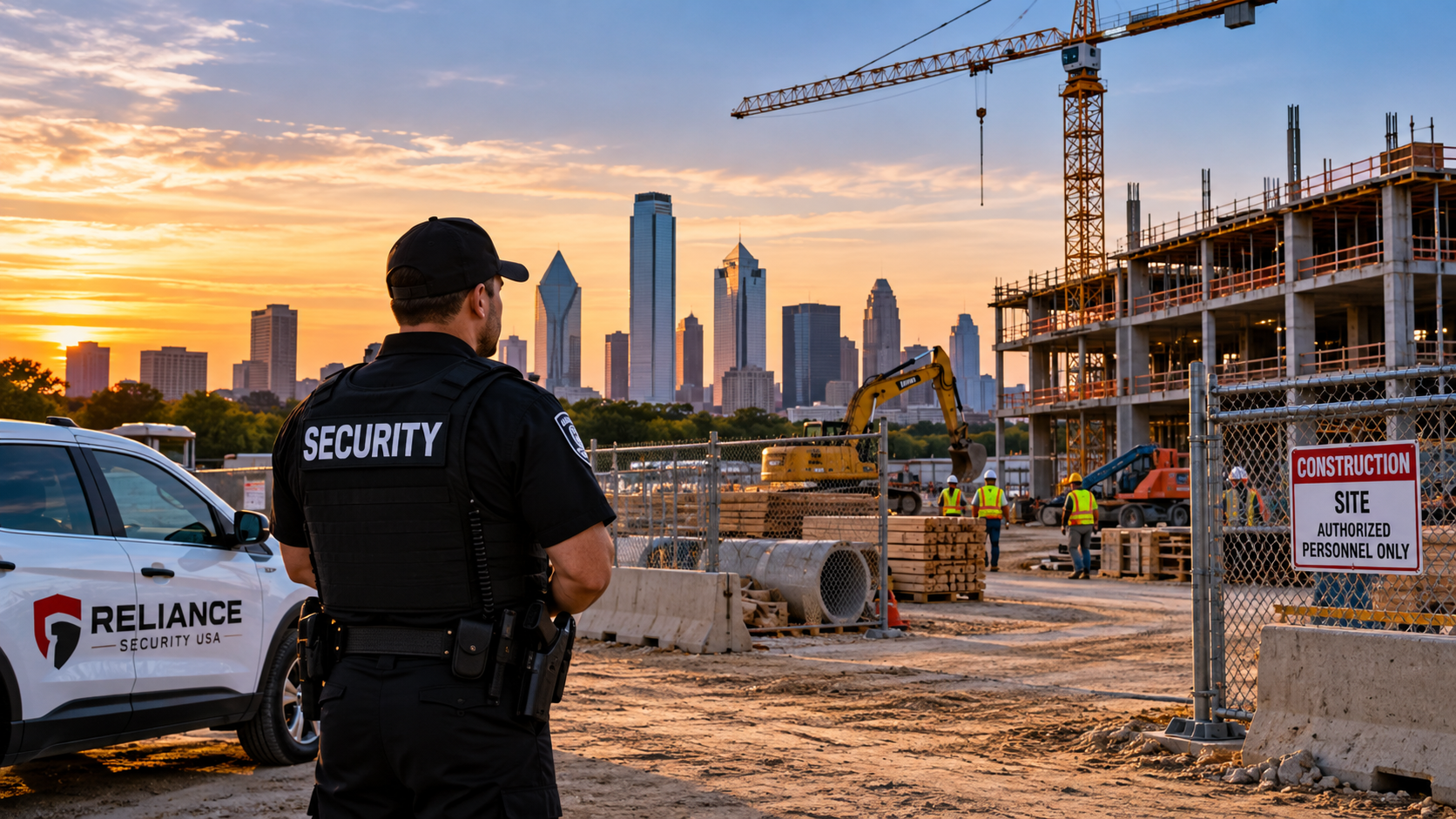
Depending on the site’s size and risk, a project may benefit from a security officer at a key entrance, scheduled or random mobile patrols, or a combination. Patrols can provide visible deterrence and check gates, perimeter conditions, equipment storage and signs of attempted entry.
Patrol frequency and coverage should be agreed around site risk, operating hours and project layout. A mobile patrol is not the same as continuous on-site guarding, so the scope should state what is checked, when visits occur and how exceptions are reported.
For projects that need periodic vehicle-based checks, explore mobile patrol services in Texas.
5. Use Video Monitoring Where It Adds Value
Remote video security monitoring can help teams observe selected areas, review alerts and respond to activity outside normal working hours. Cameras are most useful when placement, lighting, connectivity, alert rules and response processes have been planned together.
Video monitoring should complement, not automatically replace, physical controls. Decide who receives alerts, what verification is required, how incidents are escalated and how recordings are stored and accessed in line with applicable law and company policy.
Learn more about remote video security camera monitoring in Texas.
6. Plan for Fire Watch and Other Site-Specific Risks
Some projects may require fire watch or additional fire-safety measures during hot work, system outages or other conditions. Requirements depend on the work, site rules, applicable codes and instructions from the authority having jurisdiction. Confirm the actual requirement with the responsible safety professional or authority rather than assuming every site needs the same arrangement.
Keep security and safety responsibilities clear. Security personnel should know how to report hazards and emergencies, but their role and training should match the services agreed for the project.
Where required, review fire watch services in Texas as part of the site’s overall safety planning.
7. Set a Clear Incident and Reporting Process
Define how suspicious activity, damaged fencing, missing equipment, unauthorised access and emergencies should be reported. Establish contact details, escalation steps and the information to capture, such as time, location, observations and actions taken.
Review incident reports for patterns. Repeated issues at the same gate, during a particular shift or around a certain asset may indicate that the plan needs to change.
Choosing a Construction Security Provider in Texas
Ask prospective providers how they assess sites, supervise personnel, document patrols, communicate incidents and adapt coverage as a project changes. Confirm the scope of service, hours, response expectations, insurance and applicable licensing or regulatory requirements before work begins.
Reliance Security USA provides security services for different property and business needs. For a Texas project, discuss the site location, schedule, access points, asset risks and desired coverage to determine whether on-site guards, mobile patrols, remote video monitoring or a combination is appropriate.
Explore construction site security services in Texas to review the relevant service offering.
Businesses seeking broader coverage can also review security guard services in Texas.
Conclusion
Construction site security works best when it is based on a documented risk assessment and reviewed throughout the project. Access procedures, secure storage, patrols, monitoring and clear incident reporting can work together to reduce opportunities for theft and unauthorised entry.
Every project is different. Match controls to the site’s real risks and confirm that the provider can deliver the coverage and reporting the project requires.
Frequently Asked Questions
What is construction site security?
Construction site security is the set of personnel, procedures and technologies used to help protect a project from theft, trespassing, unauthorised access and related incidents.
Is mobile patrol enough for a construction site?
It depends on the site’s risk, size, layout and operating hours. Some sites may use mobile patrols, while others may need an on-site officer or a layered approach.
Can video monitoring replace security guards?
Not in every situation. Video monitoring can support detection and verification, but the right arrangement depends on site conditions, response requirements and the agreed service scope.
When is fire watch needed on a construction site?
Fire watch may be required for certain hot-work activities, fire-protection system impairments or other site-specific circumstances. Confirm the requirement with the applicable authority and responsible safety professional.
What should a construction site security plan include?
It should address site risks, access control, deliveries, equipment storage, patrol or guard coverage, monitoring, emergency contacts, incident reporting and periodic reviews.